Grey Water Damage in Centerville: Category 2 Cleanup
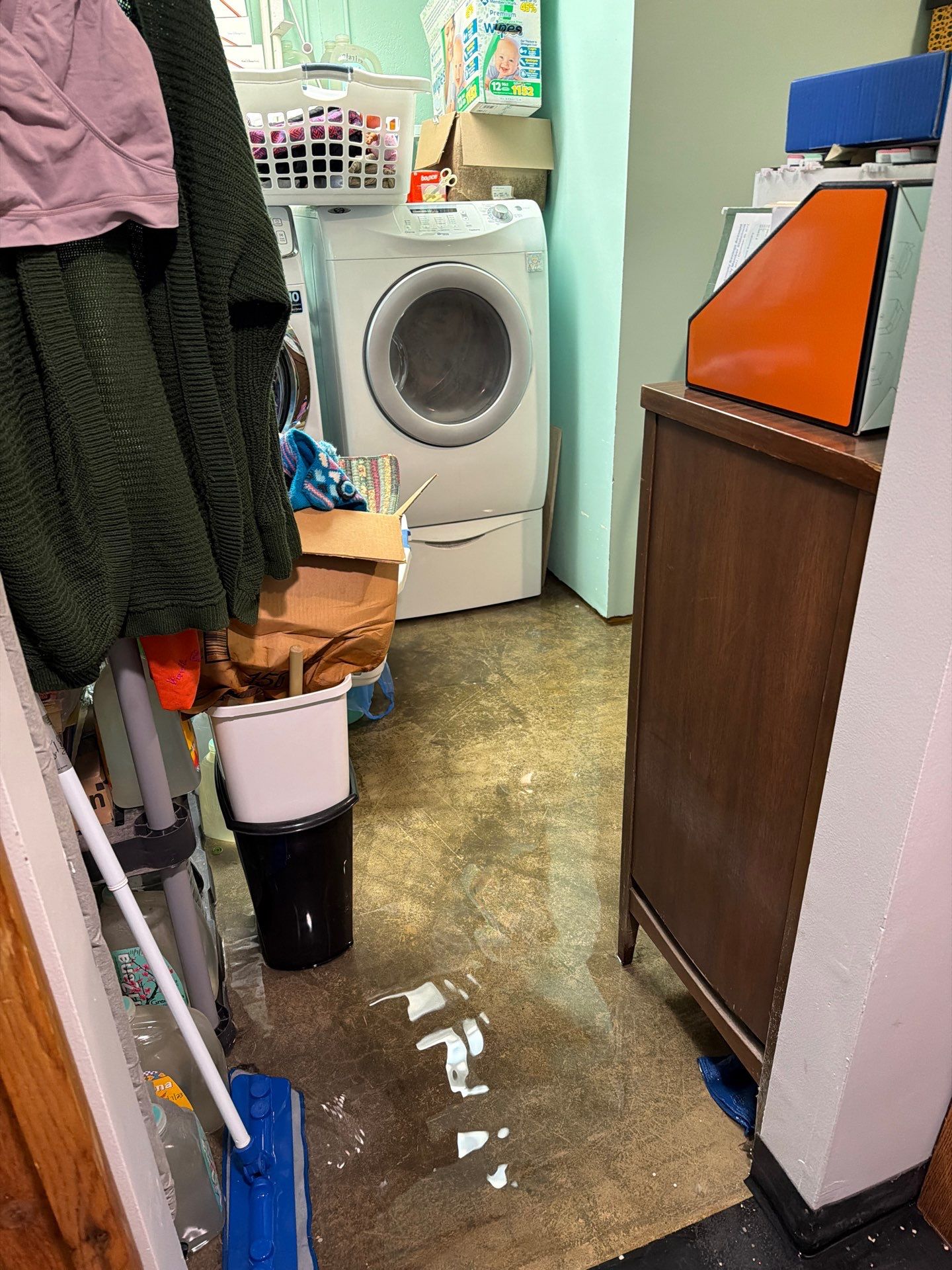
If you are standing in Centerville looking at water seeping across your floor from a washing machine hose, a dishwasher line, or an overflowed sink, you are likely dealing with what the IICRC calls Category 2 water, or grey water. It is not as clean as a snapped supply line and not as dangerous as sewage, but it carries enough contamination to make people sick if it sits. The clock starts the moment the water hits the floor, and within 24 to 48 hours grey water can degrade into Category 3, which is a much bigger problem and a much bigger bill.
At Centerville Water Restoration, we have been handling Category 2 losses across Central Indiana since 2018. We are IICRC certified, BBB A+ rated, and we work with every major insurance carrier in the Centerville market. This guide is built around the exact questions homeowners type into Google at 11pm when they are watching water spread under the baseboards. If we cannot help with your specific situation, we will tell you directly and point you to someone who can. Below, you will find straight answers on what grey water actually is, what it costs to clean up, how fast we can be at your door, and what your insurance is likely to cover.
What Grey Water Actually Is and Why the Category Matters
Grey water is water that contains significant contamination, enough that contact with it or ingestion of it could cause discomfort or illness. The source list is longer than people expect. Dishwasher discharge, washing machine overflow, aquarium spills, water beds, broken toilet tanks (not the bowl), shower drain backups before they hit the sewer line, and HVAC condensate that has been sitting all qualify. So does clean supply line water that has been sitting on flooring or drywall for more than about 48 hours, because bacteria multiply quickly once organic material from carpet padding, wood, or dust enters the picture. That timeline is one of the most misunderstood parts of water damage. A burst pipe is technically Category 1 the moment it happens, but if you discover it Monday morning after a weekend away, you are almost certainly dealing with grey water by then.
The category drives the response. Category 1 can sometimes be dried in place with fans and dehumidifiers. Category 2 requires antimicrobial treatment, removal of porous materials that absorbed the water, and documented moisture readings before anything gets closed back up. Category 3, which includes sewage backup situations, demands full containment, PPE, and disposal of nearly everything porous it touched. If a contractor in Centerville tells you the category does not matter or skips the inspection step, that is a red flag worth hanging up over.
Temperature and ambient humidity also push grey water up the contamination ladder faster than most homeowners realize. A Centerville basement that sits at 72 degrees with high relative humidity is essentially an incubator. Bacterial colonies that would take 72 hours to establish in a cool, dry crawlspace can hit problem levels in 24 hours when the conditions are right. This is why we treat any standing water in a finished living space as Category 2 by default if we cannot confirm the exact start time of the loss. Erring on the side of the higher category protects the occupants and protects the structure, and it costs less in the long run than rebuilding a wall cavity that grew mold because someone wanted to save a few hundred dollars on remediation.
The Cleanup Process from First Call to Final Reading
When our crew arrives at a Centerville home for a grey water loss, the first 20 minutes are spent identifying the source and stopping it. You cannot dry a structure that is still getting wet. From there, we map the affected area with moisture meters and thermal imaging, because grey water travels under baseboards, wicks up drywall, and pools in wall cavities where you cannot see it. The visible wet spot on your floor is almost always smaller than the actual damage footprint, and missing hidden moisture is the single most common reason mold shows up six weeks later.
Extraction comes next. For a typical finished basement loss in Centerville, we are pulling between 50 and 400 gallons of water depending on how long it sat. truck mounted extractors handle the bulk, then weighted extraction tools press water out of carpet and padding where the loss is salvageable. With Category 2, the padding almost always comes out. Carpet can sometimes be saved if the contamination level is on the lower end and the material is high quality, but padding acts like a sponge that holds contaminated water against your subfloor, and trying to keep it is usually a false economy. Drywall gets inspected for wicking, and anything wet above the standard four inch flood cut line gets opened up so the cavity behind it can dry.
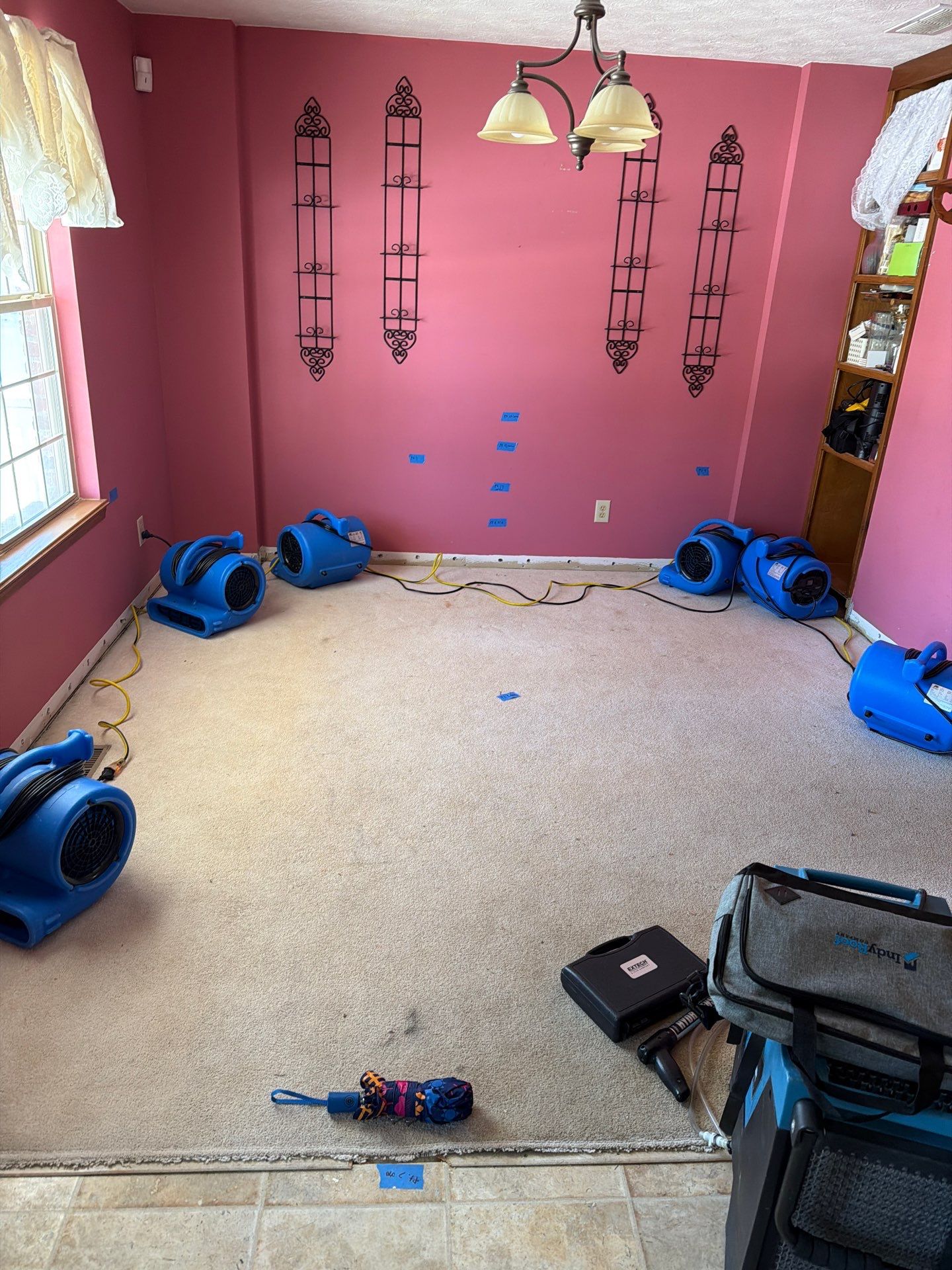
Then comes antimicrobial application. This is not bleach from the hardware store. The products we use are EPA-registered for the specific category of contamination, applied at labeled dwell times, and documented for your insurance file. After that, the drying equipment goes in. A typical grey water job in a 400 square foot basement runs three to five air movers and one or two commercial dehumidifiers for three to five days, with daily moisture readings until materials hit dry standard. If you want a deeper look at the timeline side of this, our guide on same day water damage service and fast drying walks through what realistic turnaround looks like.
Content handling runs alongside the structural work. Books, papers, upholstered furniture, mattresses, and pressboard furniture that absorbed grey water rarely come back from it cleanly, and we walk homeowners through what is worth saving versus what should be inventoried and discarded. Solid wood furniture, sealed plastics, glass, and most metals clean up fine with the right antimicrobial wipe down. Soft goods are the harder conversation, particularly when sentimental items are involved. We photograph everything before it leaves the property, log it for the claim, and give you a chance to pull anything you want to attempt to restore separately through a specialty textile cleaner before disposal happens.
Get Category 2 Water Out of Your Home Today
Grey water does not wait, and neither should you. If you have a Category 2 loss anywhere in Centerville, call Centerville Water Restoration for honest assessment, fast extraction, and direct insurance billing. We will tell you whether you need full mitigation or just guidance, and we will be on your driveway in about an hour. That is the standard we have held since 2018, and it is the reason Centerville homeowners keep our number on the fridge.
Cost, Insurance, and What Centerville Homeowners Actually Pay
Grey water cleanup in Centerville typically runs between $1,500 and $4,500 for a contained loss in a single room, and $4,000 to $10,000 once you get into finished basements, multiple rooms, or hardwood flooring that needs specialized drying mats. Those numbers include extraction, antimicrobial treatment, removal of unsalvageable materials, drying equipment, and daily monitoring. They do not include reconstruction, which is a separate phase once the structure is dry.
Most homeowner policies cover sudden and accidental grey water losses, meaning the dishwasher that failed yesterday is usually covered, while the slow leak under the sink that has been going for six months usually is not. The language insurers look for is sudden, accidental, and internal. When you call your carrier, describe what happened in those terms if it honestly fits, and ask for your claim number before any contractor starts work. We document every job with moisture maps, photos, equipment logs, and itemized scopes written in Xactimate, which is the same software your adjuster uses, so claims move faster and with less back and forth. Our breakdown of water damage restoration cost covers the line items in more depth if you want to see what an estimate should actually contain before you sign anything.
Deductibles are worth thinking through before you file. If your deductible is $2,500 and the total job is going to land around $3,000, filing the claim may not make sense once you factor in the premium impact at renewal. Centerville Water Restoration can give you a realistic scope estimate before you pick up the phone with your carrier, which is the kind of information you want in hand before a claim ever gets opened. We have talked plenty of Centerville homeowners out of filing on smaller losses where the math simply did not favor it.
One last point worth making directly: if you call us and the loss is small enough that you can handle it yourself with a shop vac, fans, and a dehumidifier rental from the local hardware store, we will tell you that. We would rather give you honest advice on a $200 problem than upsell you into a $3,000 job you did not need. That is how we have built the business since 2018, and it is why our BBB rating and our repeat customer numbers look the way they do.
Frequently Asked Questions
Is grey water dangerous to be around in my Centerville home?
Yes, enough to matter. Category 2 water carries bacteria, detergents, and organic material that can cause skin irritation or illness if ingested. Centerville Water Restoration techs wear PPE on every call and we recommend you stay out of standing water until extraction is done.
How fast does grey water turn into Category 3 sewage?
The IICRC S500 standard gives roughly 48 hours before Category 2 is reclassified as Category 3. Temperature, contamination load, and contact with porous materials can shorten that window in a Centerville basement.
Will my homeowners insurance cover Category 2 cleanup?
Most sudden and accidental grey water events are covered, including washer line breaks, dishwasher leaks, and sump pump failures with a sump rider. Centerville Water Restoration documents every job to claim standards so your adjuster has what they need.
Can you save my hardwood floors after a grey water spill?
Sometimes. If we get on site within 24 hours and the water has not penetrated the subfloor adhesive, we can often flatten cupped hardwood with mat drying. After 48 hours in Centerville humidity, replacement is usually the honest answer.
How quickly can Centerville Water Restoration get to my Centerville address?
Our standard response window across central Indiana is 60 to 90 minutes on emergency calls, 24 hours a day. Call dispatch, give us the address and the source of the water, and a crew will be moving toward you.
Have a restoration question?
Our IICRC certified Centerville crew is ready to help. Free assessments, written scopes, no pressure.